

Looking Forward: Indian Healthcare Demands in 25 Years
As we navigate 2026, the demographic narrative surrounding India remains tethered to its youth bulge. However, looking towards a different horizon, the picture is less rosy. Over the next couple decades, India’s healthcare landscape will have undergone a major shift, transitioning from a system designed for a young nation fighting infectious diseases to one that must sustain a maturing, aging, and chronically ill population. We are currently in a critical window to build the infrastructure required for an impending increase in population ageing.
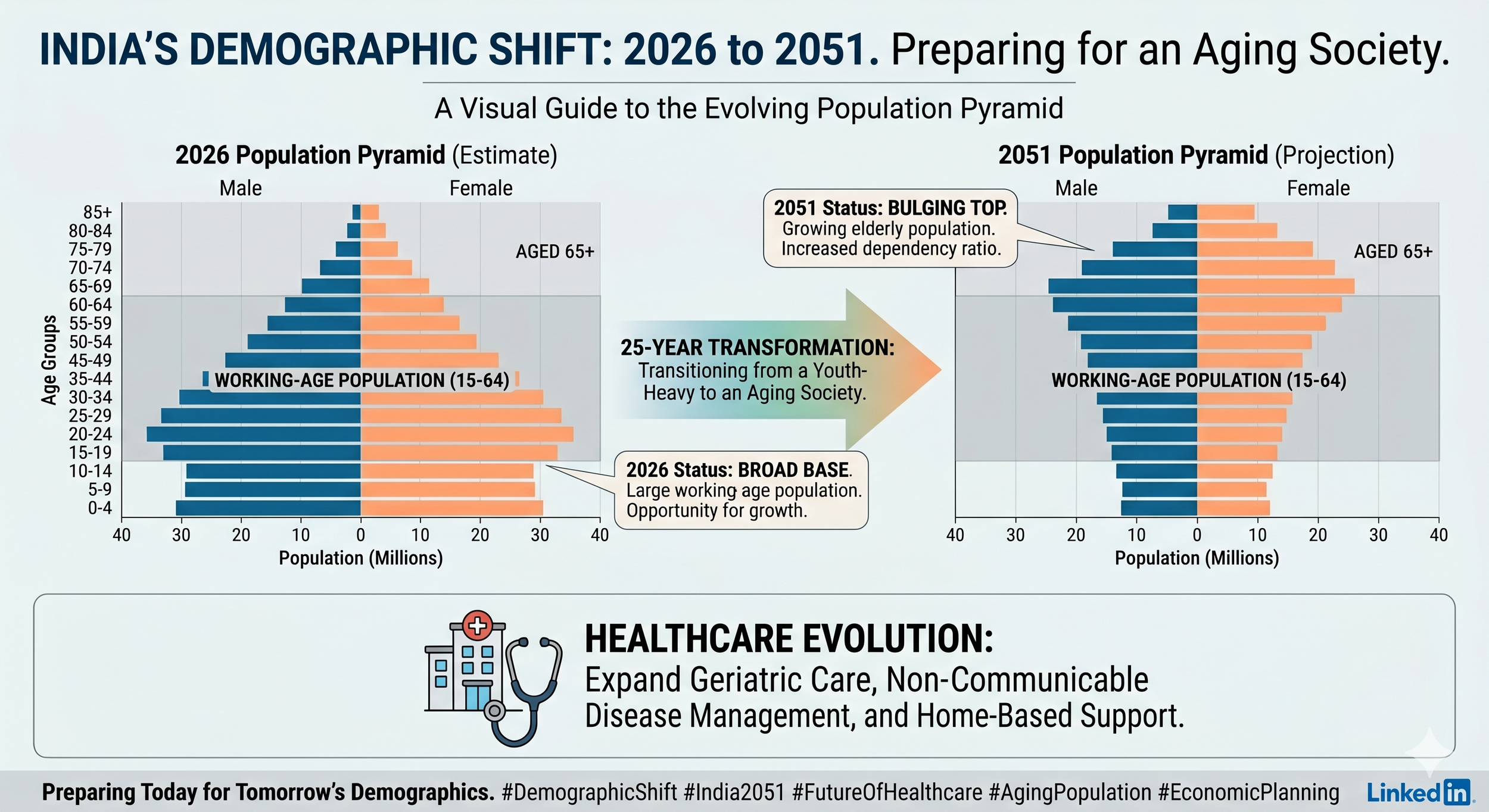
The demographic numbers are staggering: by 2036, India’s median age will rise to 35, with the 60+ population projected to reach 230 million, and by 2050, that number will hit 320 million. This aging is not uniform; South India is already mimicking European demographics, with Kerala’s elderly population hitting 20%. As the traditional joint-family system frays and the widowhood gap widens, with over 50% of elderly women being widows, the demand for home-based geriatric nursing and institutionalized care is no longer a luxury; it is a structural necessity. Capacity and resources must be built for comfortable and reliable diagnosis and care.
The Epidemiological Shift
India is no longer just fighting germs - it is fighting lifestyle-driven metabolic collapse. By 2040, obesity rates are expected to triple, serving as the primary driver for a wave of Non-Communicable Diseases (NCDs) like diabetes and hypertension. Crucially, these ailments are hitting Indians in their 30s and 40s: their peak productive years.
To manage this, the frontline of healthcare is shifting from the hospital ward to the living room. Hospitals are already operating at 80-90% occupancy. The only way to manage 320 million seniors is to treat them at home. This will herald a transition of diagnostic tools from occasional check-up gadgets to life-saving, continuous infrastructure.
The Home-Front Revolution: Clinical-Grade Diagnostics
The diagnostic revolution is anchored by four key technologies that provide a proactive shield rather than a reactive tool. First, Continuous Glucose Monitors (CGMs) and smart glucometers are tackling India’s most pressing metabolic challenge, affecting over 10.1 crore people. For the elderly, CGMs prevent Hypoglycemic Unawareness - dangerous blood sugar drops without symptoms - by sending real-time alerts to caregivers. In the next few years, we could see the widespread rise of the Artificial Pancreas, where CGMs talk directly to insulin pumps to automate geriatric care.
Second, Digital BP Monitors are evolving to detect the silent killer of hypertension, the leading cause of stroke. These devices allow for longitudinal tracking, providing 24-hour pressure maps that bypass the inaccuracies of White Coat Hypertension invoked by clinics. Third, Smart Pulse Oximeters have moved beyond pandemic basics to chronic respiratory management for COPD and asthma, featuring perfusion index (PI) tracking to distinguish between poor circulation and genuine clinical emergencies. Finally, Rapid Diagnostic Tests (RDTs) are becoming the bedside lab. At-home kits for UTIs, cardiac biomarkers (Troponin), hormone levels and vitamin deficiencies allow for immediate intervention.
Critical Sectors for Strategic Capacity
To meet these demands, India must focus on three critical sectors for capacity building over the next 15 years:
High-Value Biopharma: Leveraging the ₹10,000 crore Biopharma Shakti initiative, India is moving away from simple generics toward complex biologics for oncology, immunology, and rare diseases.
Clinical-Grade Remote Diagnostics: There is a massive opening for ISO-compliant hardware that integrates seamlessly with AI for mass NCD screening. Future devices will utilize biocompatible micro-circuitry and Lab-on-a-Chip technology to perform DNA sequencing in rural settings.
Geriatric Infrastructure: The demand for Slow Medicine - long-term rehabilitation and dementia-friendly facilities - is projected to grow at a 12%+ CAGR, requiring modular, repairable equipment.
Conclusion
Ultimately, the dual pressures of an accelerating Non-Communicable Disease (NCD) epidemic and a rapidly aging population represent the most significant hurdles for the Indian healthcare system through 2051. In this new landscape, continuous monitoring and specialized geriatric care are the paramount pillars of national health security. By investing in clinical-grade diagnostics and robust old-age infrastructure now, India can ensure that its demographic shift becomes a manageable evolution rather than a public health crisis, securing a dignified and healthy future for its 320 million seniors.
Roadrunner Exim offers a portfolio of high-quality, clinical-grade RDTs and monitoring devices designed for seamless patient tracking. We are committed to expanding our reach into new product categories to support India’s healthcare infrastructure as it pivots toward a more geriatric-focused future.
