

Portfolio Diversification Under Global Uncertainty: MedTech Supply Chains
In the global MedTech landscape, the old procurement strategy used to be clear: centralized manufacturing in one high-capacity region to maximize economies of scale and cut costs, followed by streamlined distribution around the world. This delivered unparalleled efficiency for decades, however, recent global trade and supply realities have exposed a critical flaw: supply chain efficiency without resilience is a liability.
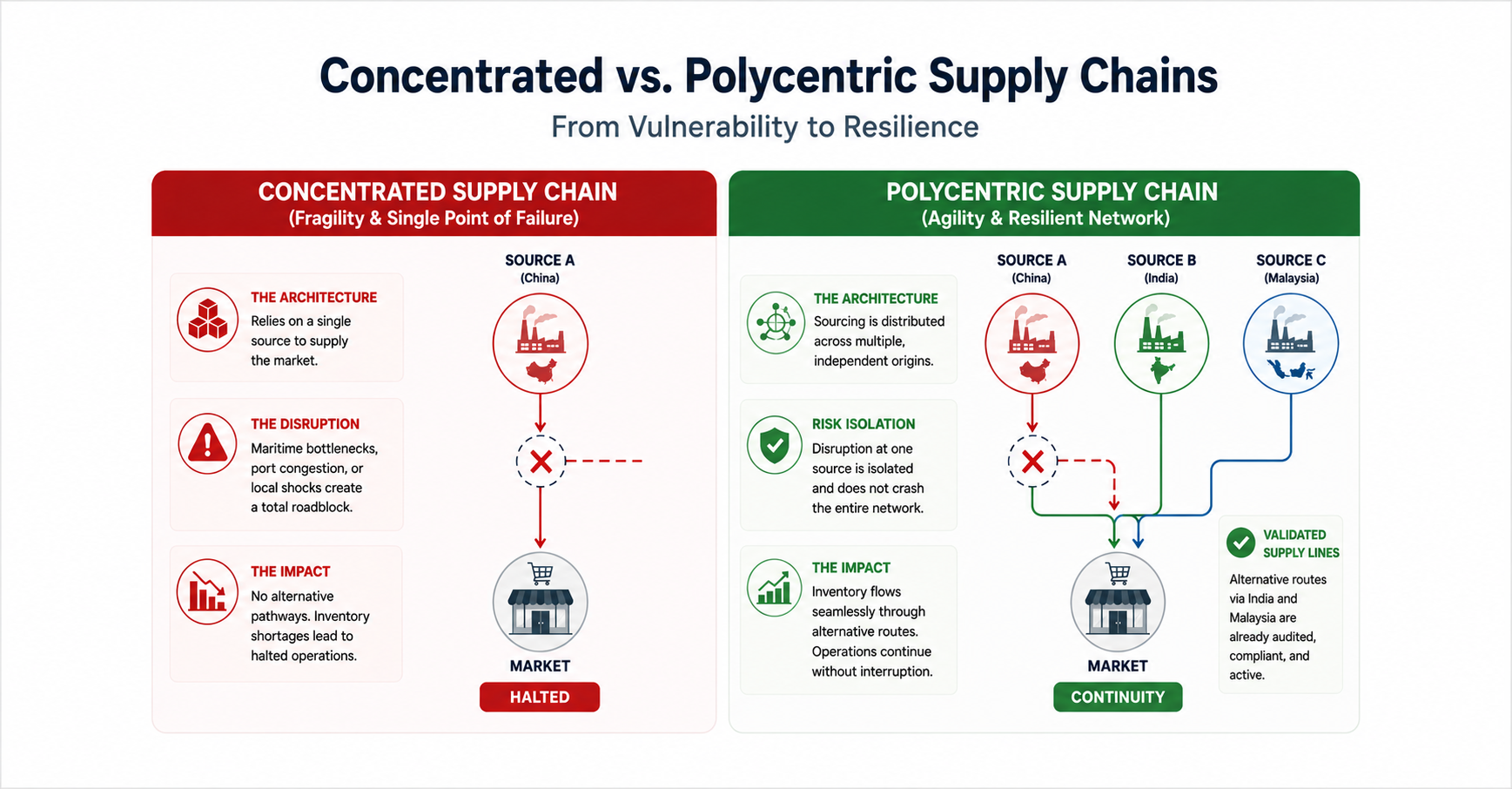
This is not about replacing established manufacturing giants like China, which remains an indispensable anchor of global production, but about intelligent portfolio diversification, the "China+1" strategy. The goal is to design a supply chain of vital medical pipelines insulated from regional disruptions, currency volatility, and logistics bottlenecks.
The Vulnerabilities: Cascading Operational Risks
A single localized event can quickly spiral into a global supply chain crisis because modern manufacturing is deeply interconnected. Key threats include:
Shipping disruptions at key ports or trade routes can force lengthy reroutes.
Extreme weather and heat waves can trigger regional power grid failures, forcing component fabrication or semiconductor plants into rolling blackouts.
Operational bottlenecks: Sudden customs standoffs at major ports, labor strikes at freight terminals, or localized health restrictions can lock finished goods in warehouses indefinitely.
Component dependencies: Many specialized diagnostics rely on ultra-specific raw materials. Issues in production of these materials can immediately halt assembly lines on another continent.
Why Supply Chain Diversification is Now Mandatory
Relying on a single manufacturing origin creates a single point of failure, such that any disruption in one region triggers product shortages worldwide. Diversifying pipelines across multiple geographic zones acts as an operational insurance policy. Forward-thinking distributors are expanding their geographical horizons toward alternative global powerhouses:
India: Ascending rapidly as a primary hub for high-precision medical electronics, complex software integration, and scalable diagnostic kit manufacturing.
Southeast Asia (Malaysia & Vietnam): Specializing in high-volume automated assemblies and optical components for analyzers.
Eastern Europe: Increasingly important for near-shoring high-complexity imaging hardware bound for Western markets.
Orchestrating a Harmonized Supply Chain
However, diversifying a MedTech portfolio can induce stress in a delicate system. A minute variance in plastic molding tolerances, optical alignment, or antibody reagent purity can alter a diagnostic threshold and compromise patient data.
This is where specialized procurement expertise becomes a competitive advantage. Roadrunner EXIM acts as the technical bridge for global distributors, enabling you to retain the cost benefits and infrastructure of mature manufacturing hubs while integrating high-quality options from emerging markets like India and Southeast Asia.
Ultimately, a polycentric supply chain is not just a defensive backup plan, but part of a resilient business strategy. Through diversified procurement across a network of reliable global partners, MedTech distributors ensure that no matter what localized disruptions occur, their products will always arrive, always work exactly as intended, and always protect patient health.
